


“A tale of three teachers”

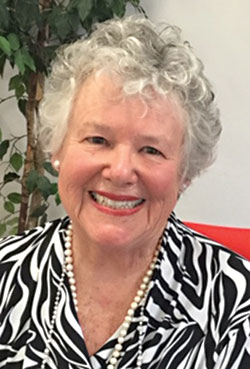
Mary Wakefield Buxton

URBANNA — There has been much discussion recently about whether teachers should teach according to a planned theme or dogma and inject political or religious bias in classrooms in public and private schools and colleges or… simply present the many sides of issues and assign readings to help students understand issues, do their own thinking and come to their own conclusions.

As both a student and teacher with experience teaching both children and adults in both public, private schools and business college, I first earned a B.A. in History from the College of William and Mary and an M.Ed. from George Washington University. I am aware of the power teachers have over young minds to influence students.

Today, however, I will skip teaching experience and share my experience as a past student with three well remembered history teachers.


Teacher No. 1, my American History teacher in my junior year in a public high school in Ohio in 1958, was a left-wing Democrat. He used his position to sell his political views along with teaching U.S. history. It was my first experience with a biased instructor.

I don’t argue with the man’s right to hold personal political views. What I didn’t like was his penalty if I didn’t agree with it.

I was assigned a term paper on Franklin D. Roosevelt with an admonition to report why I thought he was America’s greatest president. My term paper pointed up his shortcomings of his almost four terms in office with special emphasis criticizing his plan to “pack the Supreme Court” by raising the number of justices from nine to 12 to insure his preferred legislative programs passed by Congress were not later determined to be unconstitutional.

My teacher was not pleased and my paper was returned stamped with a huge “C” grade scrawled at the top of it. It was my first lesson that if a student does not feed back to some teachers their own opinions, the student’s work will be graded down.

Teacher No. 2 taught American History in college but from a neutral position. If he had his own political preferences, he kept them to himself. The class learned events that took place in our nation but without political bias.

The professor told us that historians had different interpretations of history, for example, some saw events like the Revolutionary War as a struggle to break away from capitalism and to move toward setting up socialism in the USA but others saw the breaking away from Mother England as the beginning of a continued struggle against all big institutions like king, church, government, business, or “the  majority” to insure individual freedom in all aspects of life — that is — in America the individual innate right to pursue happiness as he sees fit.

We were assigned supplementary readings to be exposed to both views and we were free to decide amongst ourselves what we believed in a classroom that listened to arguments with respect, tolerance and understanding for both sides.

Teacher No. 3, a visiting instructor, was an ideologue right from the start. In a course labeled History of Mexico, I was told up front that its history was the long struggle to establish a socialistic economy in Mexico and free oneself of capitalism.

I believed it is wrong for teachers to “sell” personal ideology in the classroom. Our final grade was based on one question on the final exam — to discuss how Mexico’s history has been one unending struggle toward the establishment of a socialistic government.

I looked at the question and immediately went to the front of the class to tell her I could not respond to her given thesis because my studies had convinced me that Mexico’s history was the story of man’s ongoing fight against the many kinds of tyranny in its past. I believed socialism was just another form of tyranny where citizens are forced to conform to the rules of big government.

She stared at me with a chilling look that suggested what she thought of my ideas. I was instructed that if I chose to respond to the exam in such a way, I would never achieve an “A.” “B is the highest grade I will give you for such a response,” she warned.

I reflected on such penalty. History was my major and I wanted the “A.” But I could not defend what I did not believe was true. “I’ll take the B,” I said and spent the next three hours passionately defending Mexican history as man’s great desire for freedom from one form of tyranny after another to think for himself and follow his own path in life.

So, yes, I’ve witnessed classroom bias when I was a student and I suspect others did too. I didn’t like it.

On top of unbiased educators, good teachers teach tolerance, empathy, civil discourse and respect to all students with differing opinions. Teaching such attributes could be even more important to learning than history.

©2022

Southside Sentinel
Southside Sentinelhttps://ssentinel.com
The Southside Sentinel has been serving Middlesex County and the adjacent region since April 9, 1896; SSentinel.com since 1997.