


Historic plunge in osprey numbers linked to lack of menhaden for food

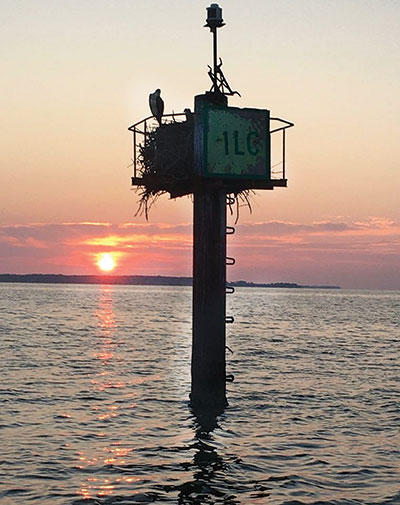
Mark Fiechter of Kilmarnock snapped this shot coming out of Locklies Creek on a Saturday morning in his sailboat, “Cygnus” back in 2024. He was greeted by a spectacular sunrise backdrop while viewing an osprey and her chick in a nest on the Locklies marker. Such scenes may soon disappear in Virginia, as osprey chicks are starving in high numbers due to over-harvesting of their main food source, menhaden, some scientists say. Virginia is reportedly the last place on the East Coast that allows menhaden reduction fishing.
(Photo by Mark Fiechter)

The 2026 season was the worst year ever recorded for breeding ospreys in the Chesapeake Bay, according to research released Monday by the Center for Conservation Biology at William & Mary.

This continues a years long trend of osprey reproductive rates struggling particularly in saltier parts of the bay, where they fell well below rates needed to sustain the population. Within tidal freshwater parts of the Bay, productivity rates only barely met the threshold needed to maintain osprey populations, according to the research, which monitored 937 osprey pairs among 23 study areas from March to August.

In 2026, a prime factor was food stress causing chicks to starve, researchers found. And the extreme food stress in recent years “appears to be caused by” changes to the availability of Atlantic menhaden, the report said.


Southside Sentinel
Southside Sentinelhttps://ssentinel.com
The Southside Sentinel has been serving Middlesex County and the adjacent region since April 9, 1896; SSentinel.com since 1997.

Stay Connected

6,848FansLike
1,063FollowersFollow
1,743FollowersFollow
101SubscribersSubscribe