



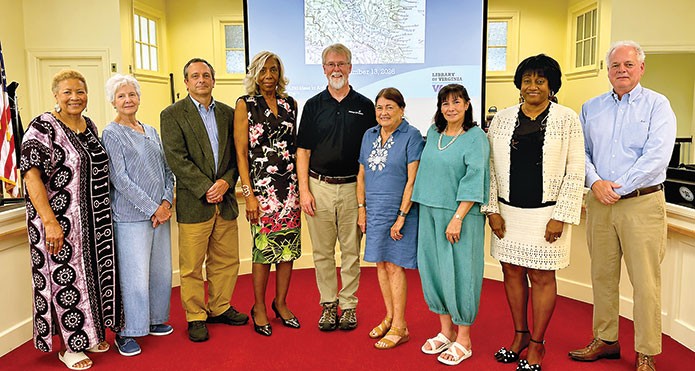
Eric Johnson, a historian at the Library of Virginia, spoke at the Middlesex County Historic Courthouse on Sept. 13 about petitions submitted to the Virginia legislature by Middlesex residents during the Revolutionary War era. Johnson explained that Virginians from all walks of life — male and female, enslaved and free — could petition the legislature to seek relief or express grievances.
One petition concerned a long-running local issue: whether the county courthouse should remain in Urbanna or be moved to a more central location. Some residents argued that Urbanna was inconvenient, particularly for those living in the lower part of the county who had to cross a creek to reach the courthouse. The petitioners complained “that great inconvenience attends the situation of their courthouse in the town of Urbanna.”
Another petition told the story of two enslaved men, Juba and Gilbert, who sought freedom by joining British royal governor Lord Dunmore at Gwynn’s Island. After they were captured, the Committee of Safety ordered them to work in the lead mines of western Virginia. Petitioners acting on behalf of their enslavers sought the men’s return as well as compensation “for the Time they have been in the service of the State.”
Through these and other petitions, Johnson’s presentation vividly demonstrated how Middlesex residents used the petition process during the Revolutionary War era to bring a wide range of local and personal concerns before the Virginia legislature.
The program was sponsored by the Middlesex County 250 Committee.