


“If the shoe does not fit, you do not wear it!” That was the advice Gloucester County Administrator Carol E. Steele gave about 150 concerned citizens during discussions over potentially locating a data center in the Glenns area of the county.
At a public informational meeting in the Rappahannock Community College auditorium in Glenns last week, Steele noted that if a data center was allowed in Gloucester it would have to meet local criteria resulting in a smooth “shoe fit.”
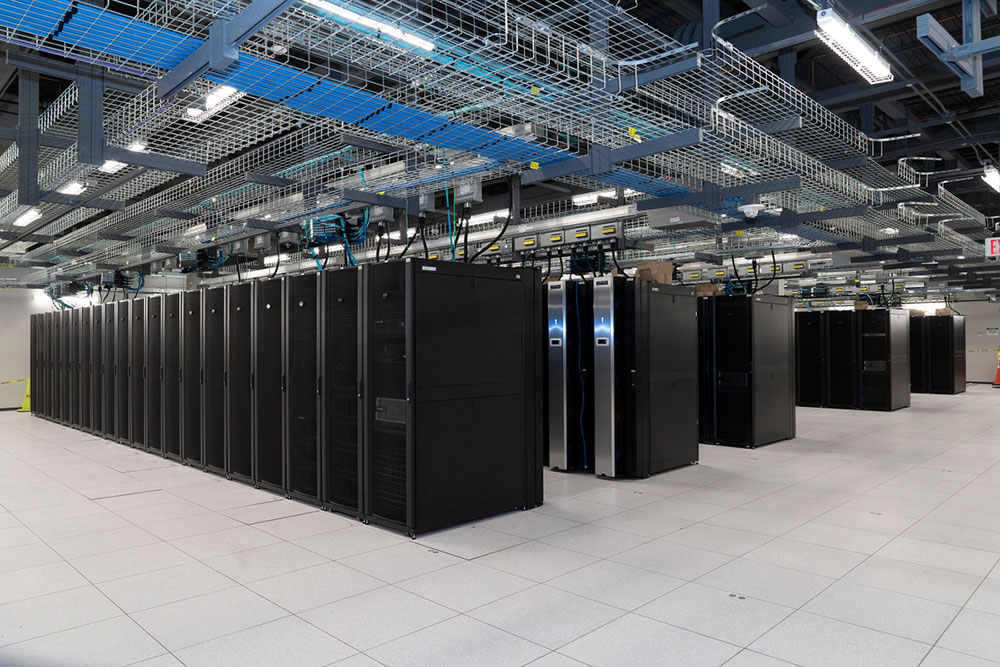
What is a Data Center?
A data center is a large building used to house critical network infrastructure, applications and data. It is composed of servers, routers, switches and storage systems.
Joe Lerch, director of local government policy for the Virginia Association of Counties (VACo), reported at the meeting that there are approximately 150 data center sites in Virginia housed in 340 buildings. Most are located in Northern Virginia.
State government is encouraging data centers in Virginia with tax incentives, said Lerch. He posted the 2025 “Virginia General Assembly: Enacted Data Center Legislation” that spoke of “investigating methods to attract data center investment to non-urbanized areas of the Commonwealth.”
Public informational meeting
The meeting was presented to educate the public and to get public insight to aid the Gloucester County Planning Commission in making recommendations on data center development to the county board of supervisors. The planning commission is considering whether benefits of data centers are worth the impact and whether or not introducing a new district allowing data centers is compatible with the county’s comprehensive plan.
During the meeting, Gloucester County Administrator Steele mentioned 10 area counties interested in data centers. Middlesex County was not on the list, but Steele and others visited a data center in Hanover County recently, which was also attended by Middlesex County Administrator Matt Walker and Middlesex County Economic Development and Tourism Executive Director Trent Funkhouser. Some counties do not have large enough “terminal” electrical capacity to support a data center, because it takes a certain size transmission line. According to Steele, there is only one transmission line large enough in Gloucester County to support a data center and that is near Glenns.
Steele presented an overview of Gloucester’s inability to stimulate other types of diverse economic development, which sounded a lot like Middlesex County. With the exception of Middlesex County’s Hummel Field airport, everything else was similar. The list noted no interstate, no railroad, no natural gas, no airport, limited capacity of U.S. Route 17, strong public desire to limit impact of the development on the county, 49% of land in land use taxation for agriculture or forestry; and finally an aging community.
Pros and Cons
Steele also provided a list of advantages for allowing a data center in the county, which included “technology changes have improved cooling options for data centers.” The county administrator noted that some data centers are not cooled by ground or river water. “One of the criteria for us would most likely be they can not use our local water to cool the system,” she said.
She noted that other advantages were the ability to avoid placement in a neighborhood; lower traffic impact than manufacturing, retail, and subdivisions because of a limited workforce required to run the facility; higher paying jobs than other industries; potential for significant equipment taxes; additional land tax; a positive fiscal impact on local construction businesses; and property owners could sell their properties for a higher value than current use without needing a zoning change.
Steele also presented potential disadvantages stating increased utility lines would need to be installed beyond the facility and paid for by all Dominion Energy customers; possible use of large amounts of drinking water to cool the system; noise and traffic to nearby residents; aesthetics of developing land for a large box type building with an unattractive substation or two; tax revenue may not be as high as expected; technology could change again leaving the county with no actual development or a closed building with limited reuse; and potential loss of agriculture and forestry lands.
Lack of trust and confidence in local government
Steele and others presented a professional view of the possibilities, but when the public spoke it was clear decisions of past Gloucester County officials have for some resulted in lack of trust and confidence in local government’s decision making.
Claims that Gloucester County’s Board of Supervisors made poor decisions in the past in allowing a landfill near Glenns and a recently built solar farm near Dragon Run, resulted in several citizens requesting the matter be put to a countywide referendum. Steele quickly countered those thoughts by saying “if a data center were to help keep real estate taxes down for a Gloucester Point taxpayer, you might want to rethink that (a referendum),” she said. “They are most likely going to vote on the side of keeping their taxes down.”
She also noted that the landfill has played a positive role in generating revenues that have helped keep real estate and personal property taxes down too.
Several citizens were angry over the recent installation of a solar farm that they say is creating environmental issues on privately owned ponds and on the Dragon Run. Steele said that part of the reason for holding the public meeting on data centers is that, like other counties in Virginia, Gloucester was not prepared to regulate the early solar farms that came into the county. “That has been corrected,” she said. “We are having this meeting so we do not have the same thing happen with data centers.”
Steele indicated the county will be conducting several other public meetings on the matter and that no one, as of yet, has applied to install a data center in Gloucester County.